

Blog
Herbal Products Manufacturing in India: A Complete Guide for Brands

Herbal products manufacturing has become one of the fastest ways for new and established brands to launch wellness products without building a factory. Whether you plan to sell herbal supplements, Ayurvedic medicines, green foods or herbal skin and hair care, the manufacturer you choose will shape your product quality, your costs and how fast you can grow.
This guide explains how herbal products manufacturing works in India, which rules apply to each product type, how herbal products third party manufacturing differs from private label, and how to compare herbal product manufacturers before you sign. It is written for brand owners, distributors, doctors, online sellers and exporters.
Quick answerHerbal products manufacturing is the process of turning herbs, extracts and other natural ingredients into finished products such as capsules, tablets, powders, syrups, oils and creams. Most brands work with a third party manufacturer that formulates, produces, tests and packs the products under the brand’s own name.
What Is Herbal Products Manufacturing?
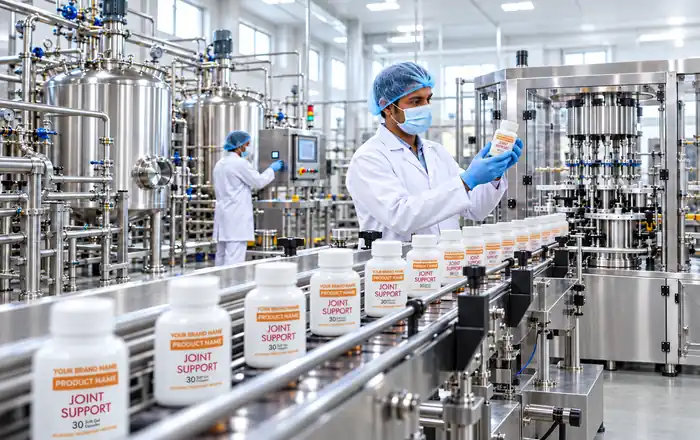
Herbal products manufacturing covers every step between a raw herb and a finished, labelled product on a shelf. It includes selecting and checking raw materials, processing them into powders, extracts or oils, converting them into a dosage form or cosmetic format, testing each batch and packing it for sale.
In India, the term usually includes several product families: Ayurvedic medicines, herbal and dietary supplements, green foods, herbal teas and juices, and herbal personal care. Each family uses different equipment, follows different rules and needs different documents, which is why many brands look for a single partner that can handle more than one.
Most herbal brands do not own a factory. They work with herbal product manufacturers who already have licensed units, laboratories and experienced teams, and focus their own effort on marketing, sales and customer relationships.
Types of Herbal Products Manufacturers Make
Herbal products fall into a few broad groups. The group decides the formats available, the rules that apply and the documents you will need.
| Product group | Common formats | Main regulator in India |
|---|---|---|
| Ayurvedic medicines | Tablets, capsules, churna, syrups, medicated ghee | relevant authority framework (state drug licence) |
| Herbal and dietary supplements | Capsules, tablets, powders, effervescent tablets | FSSAI |
| Green foods | Wheatgrass, spirulina and moringa powders and tablets | FSSAI |
| Herbal teas and juices | Tea bags, loose tea, ready-to-use juices | FSSAI |
| Herbal personal care | Hair oils, hair wash, face packs, creams, gels | Ayush framework or CDSCO (cosmetics), depending on positioning |
Many brands start with one group and add others later. Choosing herbal product manufacturers who already make several groups saves you from managing different suppliers, quality systems and paperwork for each one.
Common Formats in Herbal Products Manufacturing
The format you choose affects cost, shelf appeal and how customers use your product. These are the formats most herbal brands choose from:
Capsules
Easy to swallow and familiar to modern buyers; good for single herbs and blends.
Tablets
Compact and cost-effective, with options such as coated and effervescent tablets.
Powders (churna)
Traditional and flexible; sold in jars, pouches or sachets.
Syrups and juices
Liquid formats suited to daily routines and family use.
Oils and ghee
Herb-infused oils for hair and body, and herbal preparations in cow ghee.
Creams, gels and packs
Personal care formats for skin and hair.
Not every manufacturer makes every format. If you plan to sell several formats, check early whether one partner can produce them all to the same quality standard.
How Herbal Products Manufacturing Works, Step by Step
Every manufacturer has its own process, but most herbal products move through the same seven stages.
- BriefThe brand shares the product idea, target customer, format, sales channel and expected quantity.
- FormulationThe manufacturer suggests a ready formula or develops or adapts one, and confirms the product category.
- SamplingSamples are prepared so the brand can check colour, taste, texture, fragrance and pack fit.
- Raw materialsHerbs, extracts and other ingredients are sourced and checked against specifications.
- ProductionIngredients are processed and converted into the final format under GMP conditions.
- TestingEach batch is tested before release, usually with a Certificate of Analysis.
- Packing and dispatchProducts are filled, labelled under the brand’s name and shipped with batch documents.
The longest part of a launch is usually not production but decisions: approving samples, finalising artwork and confirming quantities. Brands that prepare these early tend to launch much faster.
What Brands Are Asking Herbal Manufacturers For Today
The requests herbal product manufacturers receive have changed over the last few years. These are the themes that come up most often in conversations with new and growing brands:
Cleaner labels
Short, readable ingredient lists and clearly named herbs.
Modern formats
Capsules, effervescent tablets and ready-to-use juices alongside traditional powders.
Smaller first orders
Lower minimum orders so brands can test a product before scaling it.
Proof of quality
Batch test reports and certificates that marketplaces and importers can check.
None of these trends replace the basics. A herbal product still needs the right formula, the right category and consistent batches, but brands that plan for these expectations from the start find it easier to win listings and repeat customers.
Herbal Products Third Party Manufacturing vs Private Label
The two most common ways to work with a manufacturer are third party manufacturing and private label. In herbal products third party manufacturing, the manufacturer produces a formula that belongs to the brand, exactly to the brand’s specification. In private label, the brand chooses a ready formula from the manufacturer’s catalogue and sells it under its own name.
| Factor | Herbal third party manufacturing | Private label |
|---|---|---|
| Formula | Belongs to the brand | From the manufacturer’s catalogue |
| Time to launch | Longer: formula review and sampling | Shorter: formula already developed |
| Exclusivity | Usually exclusive to the brand | Ready formulas may be sold by other brands |
| Best for | Brands and doctors with their own formulas | New brands, retailers and test launches |
| Investment | Higher development effort | Lower starting effort |
Herbal third party manufacturing suits brands that already have a formula or want full control of it. Private label suits brands that want to launch quickly and test demand. Many brands use both: private label for their first products, and third party manufacturing once they develop signature formulas.
Rules for Herbal Products in India
Herbal products in India are not regulated by a single body. Ayurvedic medicines fall under the drug laws, with manufacturing licences issued by state authorities under the framework of the relevant authority. Most herbal supplements, green foods, teas and juices are regulated as foods by the Food Safety and Standards Authority of India (FSSAI). Herbal cosmetics are regulated by the Central Drugs Standard Control Organisation (CDSCO), unless they are positioned as Ayurvedic products.
For a brand, this means the same herb can end up in very different categories depending on the formula, the dose and how the product is described. The category decides the licence, the label layout and the claims you can make, so it should be confirmed with your manufacturer before formulation starts.
- Which category each product belongs to
- Which licence the manufacturer will produce it under
- What the label must show for that category
- Which claims are allowed and which are not
- Which documents you will receive with each batch
Quality and Testing: What Good Manufacturers Do
Because herbs are natural materials, their quality can vary from season to season and supplier to supplier. Good herbal products manufacturing therefore depends on checks at every stage, not just at the end.
- Identity and quality checks on raw herbs before use
- Documented GMP procedures for each product
- In-process checks during production
- Finished batch testing with a Certificate of Analysis
- Batch records that link ingredients to finished products
- Retained samples for reference
Ask to see an example Certificate of Analysis and a batch record before your first order. Leading herbal products manufacturers in India will share these readily, because transparent quality is one of their strongest selling points.
What Affects the Cost of Herbal Products Manufacturing?
There is no fixed price list in herbal products manufacturing, because every product is different. These five factors usually decide your cost per unit:
Formula
Ready formulas cost less to launch than new or adapted formulas, which need development and sampling.
Ingredients
Rare herbs, standardised extracts and organic ingredients cost more than common herbs.
Format
Capsules, tablets, syrups, creams and oils each need different processes and packing.
Pack and label
Container type, pack size, box and label finish change the unit cost.
Order size
Larger orders spread fixed costs over more units; minimum order quantities vary by manufacturer.
Share your target selling price when you ask for a quote. A good manufacturer will suggest formulas and packs that fit your margin, instead of quoting for a product your market cannot support.
How to Choose Herbal Products Manufacturers in India
There are many herbal products manufacturers in India, from small single-product units to large multi-category facilities. Use these ten points to compare them:
- LicencesDoes the manufacturer hold the right licence for each product category you plan to sell?
- CertificationsCan it show GMP and other certificates, not just logos?
- RangeCan it make every format you need, so you do not need several suppliers?
- Ready formulasIs there a catalogue to start from, or only custom work?
- R&D supportIs there an in-house team to adapt or develop formulas?
- Raw materialsAre herbs checked before use, and can the source be traced?
- TestingIs every batch tested in-house, with a report you can share?
- Minimum orderIs the first order realistic for a new product?
- Packaging and labelsCan it supply suitable packs and check label content?
- TransparencyWill it share documents and welcome a factory visit?
A manufacturer that answers all ten clearly, in writing, is usually one you can build a long-term brand with.
Questions to Ask a Herbal Product Supplier Before You Order
Whether you call them a manufacturer or a herbal product supplier, the conversation before your first order matters. These questions help you understand how the partnership will work in practice:
- Which of your ready formulas fit my category and price point?
- Can I see samples before I confirm the order?
- What is your minimum order for this product and pack?
- Which licence and category will this product be made under?
- What documents will I receive with each batch?
- How long will the first order and repeat orders take?
- Who owns the formula if your team adapts it for me?
- Can you help with label design and mandatory label content?
Indian Herbal Products Manufacturers and Export
India has a long tradition of Ayurveda, a wide range of locally grown herbs and an established base of manufacturers, which is why many overseas brands and importers work with Indian herbal products manufacturers. For export, the key questions are documentation, labelling for the destination market and consistency between shipments.
Rules for herbal products differ from country to country. Tell your manufacturer the destination market before formulation, so the formula, label and documents can be planned for that market from the start.
Common Mistakes Brands Make
- Choosing on price aloneA lower quote can mean weaker testing or inconsistent batches.
- Skipping samplesAlways approve a sample before the first production run.
- Ignoring the categoryLaunching a product in the wrong category can mean relabelling or reformulating later.
- Launching too many products at onceStart with a focused range and grow from what sells.
- Not planning reordersAgree reorder timelines early so best sellers never run out.
Herbal Hills: A Herbal Manufacturing Company in Lonavala
Herbal Hills is a herbal manufacturing company and the trademarked brand of Isha Agro Developers Pvt Ltd, with more than 25 years in Ayurveda. We make herbal products for brands, doctors, distributors and exporters at our own units in Lonavala, Maharashtra, with part of our herb supply coming from our company-owned organic farm in the Sahyadri range.
- 400+ ready formulas across 8 categories
- Ayurvedic medicines, supplements, green foods, dietary supplements, personal care and medicated cow ghee
- Private label and third party manufacturing
- GMP-certified units and an in-house laboratory
- 12 certifications, including GMP, ISO, FSSAI, Halal, APEDA and AYUSHEXCIL
- Minimum order from 500 units per SKU
- Buyers in India and 30+ countries
If you are comparing herbal product manufacturers, you can explore our Ayurvedic product manufacturing services, our private label range and our third party manufacturing model, or contact our team for samples and a quote. As a herbal manufacturing company with both ready formulas and third party production, we can support you from your first 500 units to repeat orders at scale.
Frequently Asked Questions About Herbal Products Manufacturing
What is herbal products manufacturing?
It is the process of turning herbs and natural ingredients into finished products such as capsules, tablets, powders, syrups, oils and creams, including testing and packing.
What is the difference between herbal third party manufacturing and private label?
In herbal third party manufacturing, the manufacturer produces the brand’s own formula. In private label, the brand sells one of the manufacturer’s ready formulas under its own name.
Who regulates herbal products in India?
Ayurvedic medicines fall under the framework set by the relevant authority, most supplements and herbal foods under FSSAI, and herbal cosmetics under CDSCO unless they are positioned as Ayurvedic.
How do I choose herbal product manufacturers?
Compare licences, certifications, product range, R&D support, raw material checks, batch testing, minimum order, packaging support and transparency.
What is the minimum order for herbal products?
It varies by manufacturer and product. At Herbal Hills, orders start from 500 units per SKU.
Can a herbal product supplier help with packaging and labels?
Many can. Ask whether the manufacturer supplies packs, supports label design and checks mandatory label content before printing.
Why do overseas brands work with Indian herbal products manufacturers?
India offers a long Ayurvedic tradition, a wide range of local herbs and established manufacturers who can prepare export documents for different markets.
How long does it take to launch a herbal product?
It depends on the route. Ready formulas launch fastest; new or adapted formulas need extra time for development, sampling and approvals.
Ready to Start Your Herbal Product Range?
Share your product idea, category and expected quantity with our team, and we will suggest ready formulas, share samples and send a clear quote.
Herbal products manufacturing partners should supply licences, testing records and documentation on request, so ask for them before you place a first order for herbal products manufacturing.