

Blog
What Questions Should You Ask Before Signing with an Ayurvedic Manufacturer?

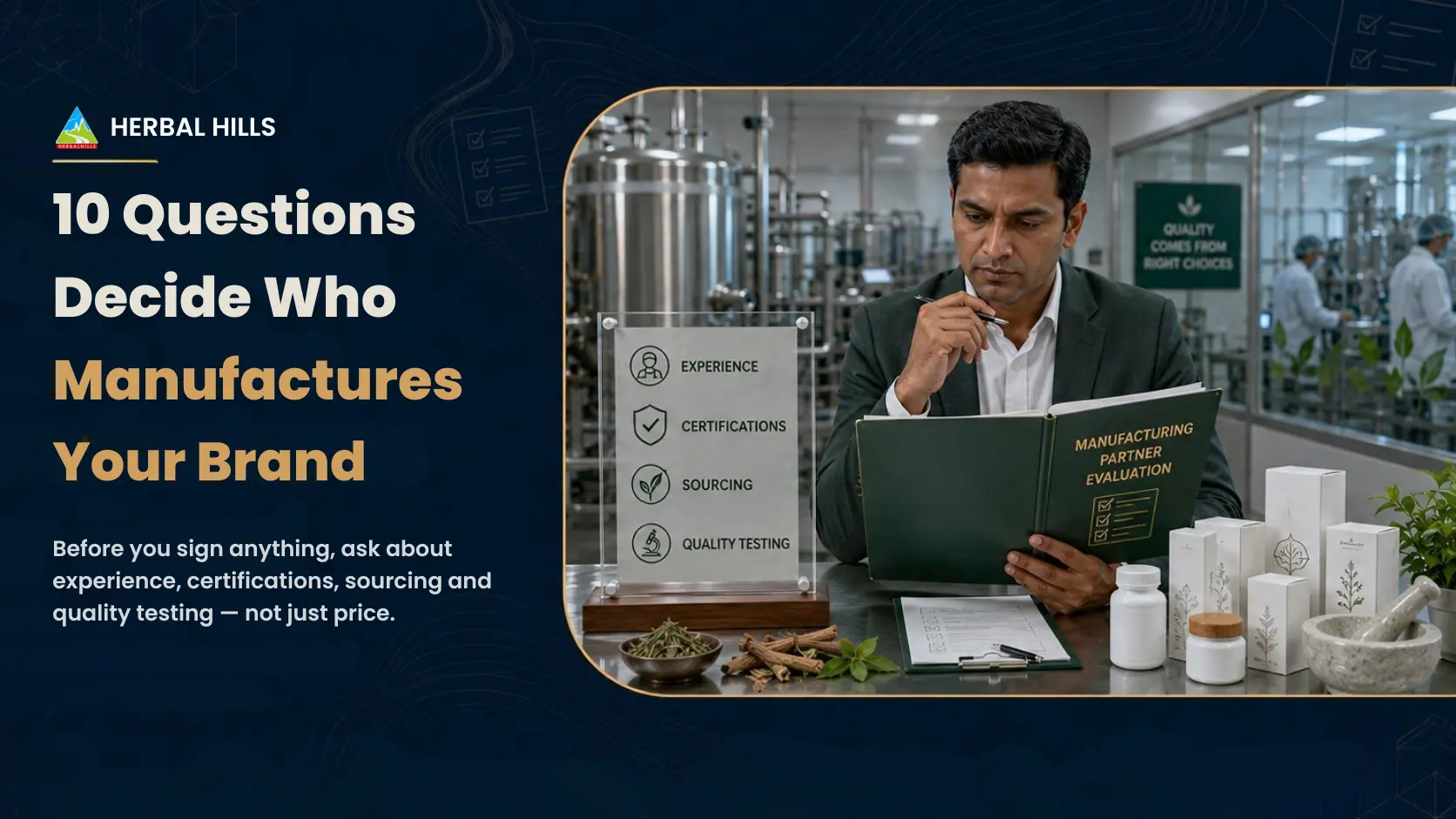
Signing with an Ayurvedic manufacturer is one of the most important decisions you will make while building your brand.
Many entrepreneurs compare manufacturers based only on price. However, the lowest quotation is rarely the best long-term business decision.
In Ayurveda, the quality of herbs, manufacturing practices and integrity of the manufacturer have a much greater impact on your business than a small difference in product cost.
Remember: your customers buy your products because they trust your brand. Your brand, in turn, depends on the manufacturer you choose. Before signing with any Ayurvedic manufacturer, ask the following questions.
10 Questions at a Glance
Experience
Certifications
Raw Herb Selection
Quality Testing
Factory Visit
MOQ
Formulation Ownership
Lead Time
Payment Terms
Complaint Handling
1. How Long Has the Manufacturer Been in Business?
Experience matters. A manufacturer with many years of experience has usually faced different market situations, quality challenges and regulatory changes. Ask questions such as:
An experienced manufacturer is generally better equipped to support long-term business growth.
2. What Certifications and Quality Standards Do You Follow?
This should be one of your first questions. Ask about certifications such as:
These certifications demonstrate that the manufacturer follows recognised quality systems and documented manufacturing processes. However, certifications alone are not enough.
3. How Do You Select Your Raw Herbs?
This is probably the most important question in Ayurvedic manufacturing. Unlike many pharmaceutical products, Ayurveda is based on natural herbs. For most herbs, multiple quality grades are available in the market.
For example, herbs such as Amla, Ashwagandha, Giloy or Shatavari may be available in different grades depending on factors such as maturity, sourcing, processing and overall quality. A laboratory can test parameters such as:
4. What Quality Testing Is Performed?
A responsible manufacturer should have a documented quality control process. Ask questions such as:
A good manufacturer should be transparent about its quality systems.
5. Can I Visit the Manufacturing Facility?
The answer should be yes. Visiting the factory gives you confidence about:
A factory visit often tells you far more than a brochure or website ever can.
6. What Is Your Minimum Order Quantity (MOQ)?
Ask whether the manufacturer offers startup-friendly MOQs. Low MOQs allow entrepreneurs to:
Choosing a manufacturer with flexible MOQs can make a significant difference during the early stages of your business.
7. Who Owns the Formulation?
Clarify this before production begins. Ask:
Having clear expectations prevents misunderstandings later.
8. What Is the Typical Lead Time?
Understand:
Reliable delivery schedules are essential for maintaining inventory and customer satisfaction.
9. What Are the Payment Terms?
Discuss payment terms clearly before placing the order. Understand:
Clear financial communication builds long-term relationships.
10. How Are Customer Complaints Handled?
No manufacturing system is perfect. What matters is how problems are resolved. Ask:
A transparent complaint management system reflects a mature organisation.
The Most Important Question of All
In Ayurveda, this question is more important than price. Why? Because the quality of your products determines the future of your brand. Your customers buy your products expecting better health. If they experience consistent quality and positive results, they buy again. If they don’t, they rarely return.
Why Quality Is the Foundation of Repeat Business
Every successful Ayurvedic business depends on repeat customers. Customer acquisition through advertising is becoming increasingly expensive. The real profitability of a business comes from repeat purchases — and repeat purchases depend on only one thing: customer satisfaction. Customer satisfaction depends on product quality.
1. Quality 2. Quality 3. Quality
Everything else — marketing, branding, advertising and packaging — helps acquire the first customer. Only quality earns the second purchase. And the second purchase is what builds a sustainable business.
Why Herbal Hills Focuses on Quality First
For more than two decades, Herbal Hills has believed that long-term business is built on customer trust. Our approach includes:
We believe our responsibility does not end when the products leave our factory. Our success is measured by the long-term success of the brands we help build.
Checklist Before Choosing an Ayurvedic Manufacturer
Before signing your manufacturing agreement, ask yourself:
- ✅ Does the manufacturer have sufficient experience?
- ✅ Are recognised quality systems followed?
- ✅ Can they explain how they source raw herbs?
- ✅ Do they perform documented quality testing?
- ✅ Are factory visits welcomed?
- ✅ Are MOQs suitable for your business?
- ✅ Are formulation ownership terms clear?
- ✅ Are lead times realistic?
- ✅ Are payment terms transparent?
- ✅ Is there a professional complaint resolution system?
If the answer is yes, you have probably found the right manufacturing partner.
Final Thoughts
Choosing an Ayurvedic manufacturer is not simply about selecting someone who can produce your products. It is about choosing a long-term partner who will influence your brand reputation, customer satisfaction and future business growth.
Price may help you win the first order. Marketing may help you acquire the first customer. But only consistent product quality creates trust. And trust creates repeat business.
At Herbal Hills, this philosophy has guided us since the beginning. Because in the health industry, where customers place their well-being in your hands, there is one principle that never changes:
Quality builds trust. Trust builds repeat business. Repeat business builds great brands.
Signing With an Ayurvedic Manufacturer: Key Takeaway
Signing with an Ayurvedic manufacturer is a long-term decision, so test it with questions, samples and a site visit first.
What should you verify before signing with an Ayurvedic manufacturer?
Verify certifications, raw material sourcing, testing practice and references before signing with an Ayurvedic manufacturer.
Is price the main factor in signing with an Ayurvedic manufacturer?
No, because signing with an Ayurvedic manufacturer only on the lowest quote can cost you quality and trust later.
Should you ask for samples before signing with an Ayurvedic manufacturer?
Yes, sample evaluation shows product quality and presentation before signing with an Ayurvedic manufacturer.
Is a factory visit useful before signing with an Ayurvedic manufacturer?
Yes, a visit shows hygiene, infrastructure and systems that matter when signing with an Ayurvedic manufacturer.
What written terms matter when signing with an Ayurvedic manufacturer?
Confirm quantities, timelines, quality checks and responsibilities in writing before signing with an Ayurvedic manufacturer.
How do repeat orders relate to signing with an Ayurvedic manufacturer?
Consistent quality drives repeat purchases, which is why signing with an Ayurvedic manufacturer deserves careful due diligence.
Official background on Ayurvedic products is available from the the relevant authority’s website.
Related Reading
Frequently Asked Questions
Is the lowest-cost manufacturer always the best choice?
Not necessarily. Lower prices may sometimes reflect differences in raw material quality, manufacturing processes or service levels. Long-term value is generally more important than the lowest initial cost.
Why is trust so important in Ayurvedic manufacturing?
Because natural herbs can vary in quality, consistency and sourcing. While laboratory testing verifies many important quality parameters, the manufacturer’s sourcing philosophy and quality standards also play a significant role.
Should I visit the manufacturing facility?
Yes. A factory visit helps you understand the manufacturer’s infrastructure, quality systems and overall professionalism.
How important are repeat customers?
They are essential. Repeat customers reduce marketing costs, improve profitability and create sustainable business growth. Consistent product quality is one of the biggest drivers of repeat purchases.
Can Herbal Hills help me evaluate the best manufacturing strategy?
Yes. We work closely with entrepreneurs to help them select the right products, manufacturing approach, packaging and quality systems so they can build a successful and trusted Ayurvedic brand.