

Dietary Supplements Catalogue
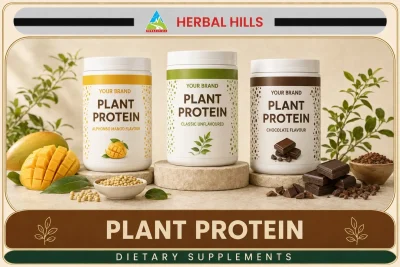
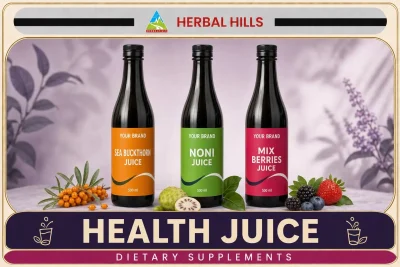
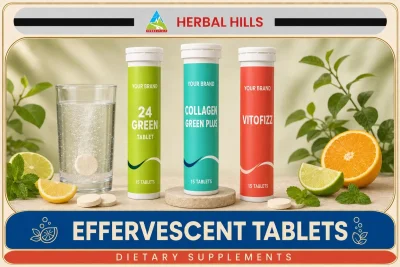
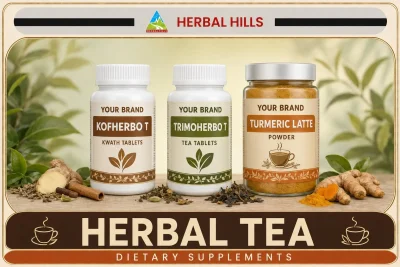
Herbal Hills’ dietary supplements catalogue is our master listing across plant protein, health juices, effervescent tablets, herbal teas and green food supplements, manufactured at our GMP, ISO and USFDA-certified facility in Lonavala, Maharashtra, within a 400+ product catalogue backed by 20+ years of manufacturing experience. Each item can be produced under your brand, with label design, packaging and registration support.
The dietary supplements catalogue is Herbal Hills’ master listing of private label dietary supplements, manufactured under GMP, ISO and USFDA-certified conditions, with a 500-unit starting MOQ.
What the Dietary Supplements Catalogue Covers
- Category scope — plant protein, health juices, effervescent tablets, herbal teas and green food supplements
- Product types — the range as listed in the catalogue, in the formats shown
- Private label branding — every catalogue item can be produced under your own brand
- Related ranges — see the daily health supplement catalogue, the health juice catalogue, the herbal tea catalogue and the quick label dietary supplement catalogue
Using the Catalogue to Build Your Private Label Range
- Browse the categories and shortlist the products that fit your brand
- Request samples or discuss formulation adjustments with our R&D team
- Confirm the MOQ (starts at 500 units) and your packaging format
- Finalize label design under your brand identity
- Production, in-house lab testing and dispatch
Quality Assurance & Certifications
Herbal Hills products are manufactured at a facility holding the following certifications and registrations, as listed on our certifications page:
| Certification / registration | Scope |
|---|---|
| GMP | Good Manufacturing Practice — facility hygiene, process control, batch consistency |
| ISO | Quality management systems |
| FSSAI | Food Safety and Standards Authority of India registration |
| USFDA | Registration with the US Food and Drug Administration |
| USDA Organic (NOP) | USDA organic standard |
| IMO (NPOP) | Organic certification by IMO Control |
| Halal | Halal certification |
| APEDA | Export registration — agricultural and processed food products |
| FIEO | Export registration — Federation of Indian Export Organisations |
| AYUSHEXCIL | Export promotion registration for Ayurvedic products |
| Export Inspection Council (EIC) | Plant approved by the Export Inspection Council, Mumbai |
Browse the dietary supplements catalogue, shortlist the products that suit your brand, and contact our team for samples and formulation support.
Dietary Supplements Catalogue – Key Facts
- Categories: plant protein, health juices, effervescent tablets, herbal teas and green food supplements
- Role of this page: a master index that links to each category catalogue
- Formats across the range: powders, tablets, dissolvable tea tablets, latte powder and 500 ml juice bottles
- Private label: all categories can be produced under one brand, with free label design
- MOQ: from 500 units per product
- Certified plant: GMP, ISO and USFDA; FSSAI, Halal, USDA Organic and IMO (NPOP) also held
- Where it is made: our own Lonavala facility in Maharashtra, with the head office in Mumbai
Unlike a single-category sheet, the dietary supplements catalogue works as a map. Each tile above opens a dedicated catalogue, and this guide explains how the five categories fit together, which formats they use and how a nutrition brand can plan a range that grows from one SKU to a full shelf.
How the Dietary Supplements Catalogue Is Organised
| Category | Typical formats | Where to see the products |
|---|---|---|
| Plant protein | Powders in multiple flavours and bases | Plant protein manufacturer |
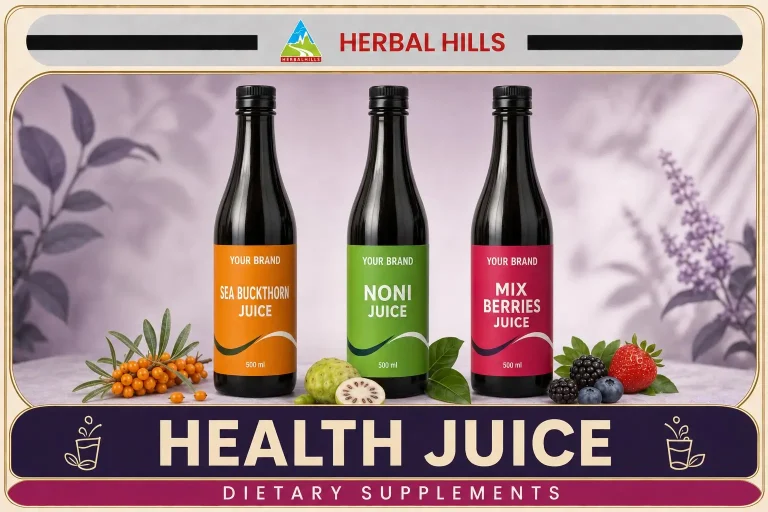
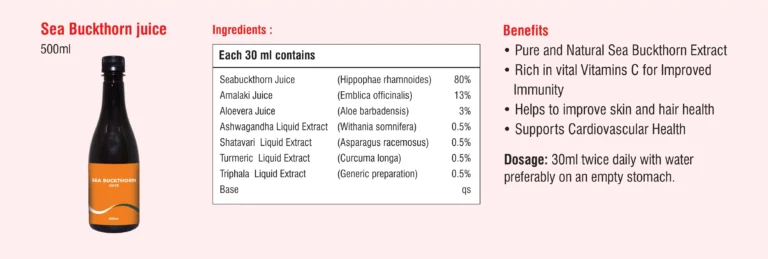
| Health juices | 500 ml bottles (Sea Buckthorn, Noni, Mix Berries) | Health juice catalogue |
| Effervescent tablets | Fast-dissolving tablets in tubes | Effervescent tablets catalogue |
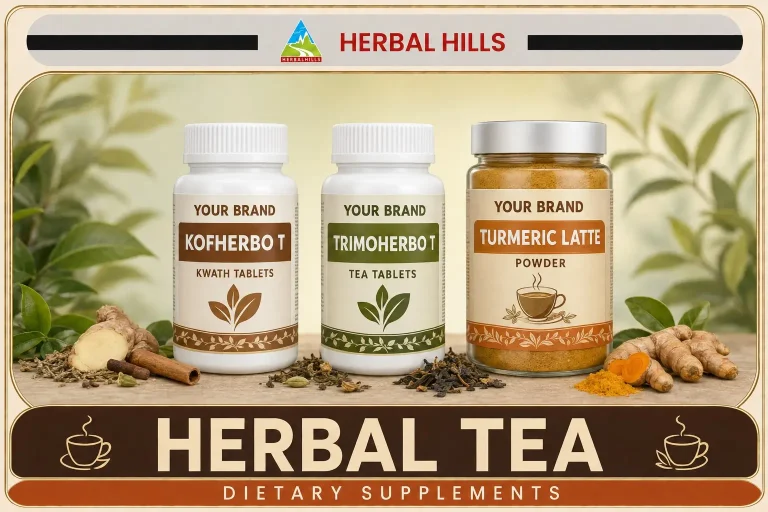
| Herbal teas | Tea tablets and a latte powder | Herbal tea catalogue |
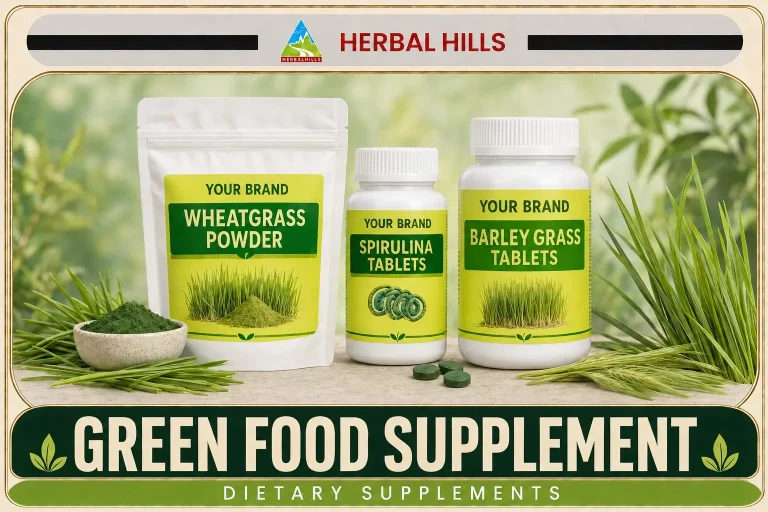
| Green food supplements | Powders and tablets built on greens | Green food supplement catalogue |
Product names, compositions and pack sizes live on each category page and in its PDF. The table is a guide to formats, so you can decide which part of the dietary supplements catalogue to open first.
Which Category Should a New Nutrition Brand Start With?
There is no single right answer, but the decision usually follows the customer you already have. The scenarios below show how different buyers use the dietary supplements catalogue to pick a sensible first product, then widen the range once sales data arrives.
Fitness and active-lifestyle labels
Within the dietary supplements catalogue, protein is the natural anchor for these labels. A plant-based powder gives a non-dairy option, and effervescent tablets add a portable product for gym bags. Starting with two formats keeps stock simple while still offering a routine that customers can repeat every day.
Ayurveda-first wellness brands
Herbal teas and juices built on classical names such as Triphala, Amalaki, Tulsi and Yashtimadhu sit comfortably next to an Ayurvedic story. These brands often begin with a tea tablet, because it is easy to explain, and later add a juice for a more premium shelf.
Marketplace and D2C sellers
Online sellers tend to like products that ship light and photograph well. Tea tablets, effervescent tubes and green food powders fit that brief. The dietary supplements catalogue lets one seller cover several search categories from a single manufacturing partner.
Exporters and importers
Overseas buyers often bundle categories into one container to save freight. Because every category in the dietary supplements catalogue is produced at the same plant, export documentation can be prepared together. See how we handle exports ahead of planning volumes.
Format Guide: What Each Part of the Dietary Supplements Catalogue Offers
Formats matter as much as ingredients in nutrition retail, and the dietary supplements catalogue spans more of them than any single category page. They decide price perception, shelf space, shipping cost and how easily a shopper builds a habit. The quick notes below compare the main formats used across the five categories.
- Powders (plant protein, green foods, latte powder) suit kitchen routines and flexible serving sizes chosen by the shopper
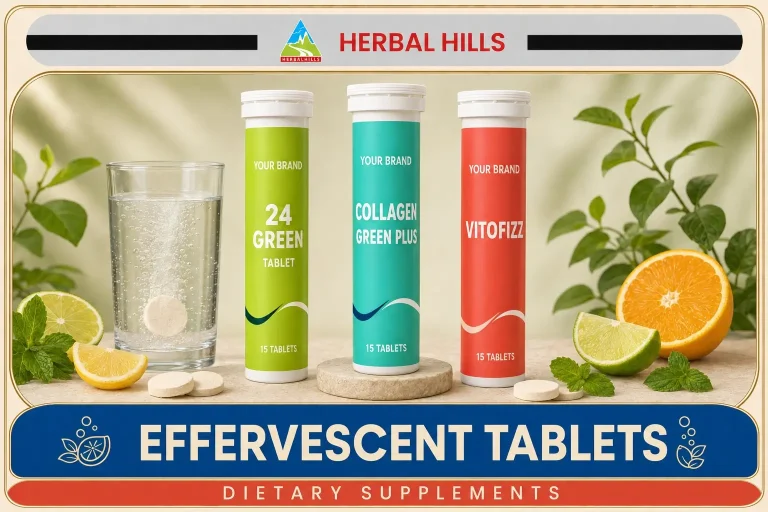
- Effervescent tablets dissolve in water and travel well in compact tubes
- Tea tablets replace tea bags with a single compressed piece per cup
- Juices give a ready-to-pour bottle with strong shelf visibility
- Standard tablets appear in green food lines for shoppers who prefer not to mix anything
Mixing formats from the dietary supplements catalogue inside one brand is common. A shopper who buys a protein powder may also pick up a tea tablet tube, so consistent branding across formats becomes a real advantage for anyone building from the dietary supplements catalogue.
How Do Buyers Compare Categories in the Dietary Supplements Catalogue?
Most buyers compare categories on four practical points: how the product is used, how it ships, how it looks on a shelf and how much explaining it needs. Scoring each category against those points is a quick way to rank options before you request samples.
| Category | Use at home | Shipping | Shelf impact | Explaining needed |
|---|---|---|---|---|
| Plant protein | Mix into water or milk | Light, robust tubs or pouches | Large tubs stand out | Low |
| Health juices | Pour and drink | Heavier; needs careful cartons | Tall coloured bottles | Low |
| Effervescent tablets | Drop into water | Very light tubes | Small, colourful tubes | Low |
| Herbal teas | Dissolve in warm water or milk | Light bottles and jars | Compact bottles | Medium |
| Green food supplements | Mix powder or take tablets | Light jars or pouches | Green-themed packs | Medium |
The table reflects format traits only. It is not a ranking of quality or results, and it says nothing about what any product does in the body. Use it with the category PDFs and the samples to choose where your own dietary supplements catalogue range should begin.
A typical outcome is a two-category start: one hero product with strong shelf impact and one light, low-cost product for online bundles. Once both are selling, the remaining categories in the dietary supplements catalogue can be added with the same brand template.
One Partner, One Set of Brand Rules
Consolidating vendors sounds abstract, so here is what it means in practice. When protein, juices, teas, effervescent tablets and green foods come from one plant, your artwork guidelines, label templates, batch paperwork and approval steps stay the same for every SKU.
Our label designing service costs nothing extra for private label clients and can build a master template that adapts to bottles, jars, tubes and pouches. The packaging team then matches containers across categories so the family looks consistent online and on shelf.
Keeping a multi-category Dietary Supplements Catalogue range consistent
Brands that grow fast often end up with five suppliers and five different label styles. Working from one dietary supplements catalogue avoids that drift. Colours, fonts, ingredient panel layouts and batch-number positions can be fixed once and reused for every new product.
Regulation: Food Supplement or Ayurvedic Product?
Products in the dietary supplements catalogue can follow different regulatory paths. Many nutrition items, such as protein powders and green food blends, are usually positioned as foods or nutraceuticals under FSSAI rules. Others are made as Ayurvedic proprietary items, a route supervised by the relevant authority.
Which path applies depends on the formula, the market and the words on the pack. Ask the brand’s regulatory adviser to sign off each label claim before launch. On our side, herbal ingredients are described only as traditionally used in Ayurveda.
Testing and Documentation Across the Dietary Supplements Catalogue
Every batch in the dietary supplements catalogue, whatever the category, goes through our in-house laboratory first; specialised tests are sent to NABL-accredited labs. A Certificate of Analysis travels with each dispatch. The testing page explains the process in more detail.
Production takes place at our own Lonavala plant, whose certificates cover GMP, ISO and USFDA; our certification list adds FSSAI, Halal, USDA Organic and IMO (NPOP). Some herbs are sourced from Herbal Hills’ farmland in the Sahyadris. Buyers can book a factory visit to see the lines.
Planning a First Order From the Dietary Supplements Catalogue
- Open the category catalogues linked above and shortlist products
- Confirm the minimum order quantity (500 units per product to start)
- Request samples across the formats you plan to sell
- Agree one brand template for labels and cartons
- Complete your regulatory review for each market
- Approve proofs, schedule production and receive the CoA with each batch
Looking for faster launches? The quick label dietary supplement catalogue groups ready formulations, and the daily health supplement catalogue focuses on everyday products. For medicines, open the Ayurvedic medicines catalogue.
If a product is missing, the custom formulation desk can help. Background on our third party manufacturing model and the complete list of private label services is also online.
Why Work With Herbal Hills on Nutrition Products?
Herbal Hills (Isha Agro Developers Pvt. Ltd.) brings two decades of production know-how across 400+ products. The Lonavala plant handles powders, tablets and liquids, and the Mumbai head office in Charkop, Kandivali (W) coordinates artwork, approvals and dispatch.
For brands, that combination means fewer handovers. A single team answers questions on protein, juices, teas and green foods, and the same quality documents arrive with every category in the dietary supplements catalogue.
Start a conversation through Contact Us, or call our sales desk on 22-28686868.
Summary
Five private label categories sit inside the Herbal Hills dietary supplements catalogue: plant protein, health juices, effervescent tablets, herbal teas and green food supplements. Our certified Lonavala plant makes all of them, artwork is free, every batch ships with a CoA, and orders start at 500 units.
Frequently Asked Questions
What is in Herbal Hills’ dietary supplements catalogue?
It is our master listing of private label dietary supplements, manufactured at a GMP, ISO and USFDA-certified facility in Lonavala, Maharashtra. Herbal Hills’ overall catalogue is 400+ products.
Can I download the catalogue as a PDF?
Individual category catalogue pages offer a Download Catalogue PDF button where available. For the most current catalogue materials, please request them via the Contact Us page.
Can I sell these products under my own brand?
Yes. Herbal Hills offers private label and third-party manufacturing, with label design and packaging support.
What is the minimum order quantity?
Herbal Hills’ MOQ for private label and third-party manufacturing starts at 500 units.
What types of products does this catalogue include?
The catalogue lists Herbal Hills’ private label plant protein, health juices, effervescent tablets, herbal teas and green food supplements. Herbal Hills manufactures to your specification.
Can a formulation be adjusted or developed for my brand?
Yes. Herbal Hills offers custom formulation support — see the Custom Ayurvedic Formulation page.
What certifications does Herbal Hills hold?
Herbal Hills holds GMP, ISO, FSSAI, USFDA, USDA Organic (NOP), IMO (NPOP), Halal, APEDA, FIEO, AYUSHEXCIL and Export Inspection Council approvals. See our certifications page for details.
Where does Herbal Hills manufacture?
Herbal Hills manufactures at its own facility in Lonavala, Maharashtra, supported in part by its own organic farm in the Sahyadri range.
What does the dietary supplements catalogue include?
It indexes five categories: plant protein, health juices, effervescent tablets, herbal teas and green food supplements. Each tile links to that category’s own catalogue.
Can one brand order from several categories in the dietary supplements catalogue?
Yes. All five categories are produced at the same Lonavala plant, so one brand can combine powders, tablets, tea tablets and juices under one label style.
Are the products food supplements or Ayurvedic medicines?
It depends on the product and market. Some follow FSSAI food rules, others the Ayurvedic route under the Drugs and Cosmetics Act. Your regulatory adviser should confirm the route and review every claim.
Is label design included?
Yes. Artwork comes at no extra cost for brands ordering from the dietary supplements catalogue, and one master template can be adapted across bottles, jars and tubes.
Do you test every batch?
Yes. Every dietary supplements catalogue batch is examined in-house, specialised testing is outsourced to NABL-accredited labs, and the CoA travels with each consignment.
Where can I see product names and compositions?
Open the linked category catalogues, such as the herbal tea and health juice catalogues, which carry product sheets and downloadable PDFs.
Contact with an Expert
Explore Our Dietary Supplement Categories
Plant Protein
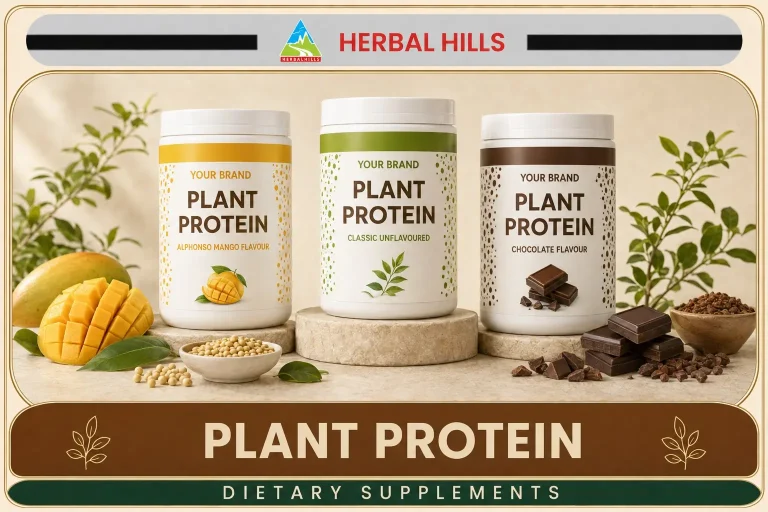
Our plant protein range is formulated for brands targeting fitness, active nutrition, and everyday wellness consumers looking for non-dairy protein options. Available in multiple flavours and base formulations, this category suits both standalone protein brands and wellness lines looking to add a nutrition SKU.
Health Juices
Our herbal health juice range combines classical Ayurvedic ingredients into ready-to-drink and concentrate formats, suited to everyday daily-wellness use. These formulations are popular with brands targeting health-conscious retail and D2C consumers.
Effervescent Tablets
Effervescent tablets offer a convenient, fast-dissolving format for vitamins, minerals, and herbal actives — a growing category among consumers who prefer a quick, portable alternative to capsules or syrups. Herbal Hills manufactures effervescent formulations across several health categories, from daily wellness to multivitamins.
Herbal Teas
Our herbal tea range draws on traditional Ayurvedic herb combinations for everyday wellness and digestive comfort. This category works well as an entry-level product for brands looking to build consumer trust before expanding into capsule or tablet formats.
Green Food Supplements
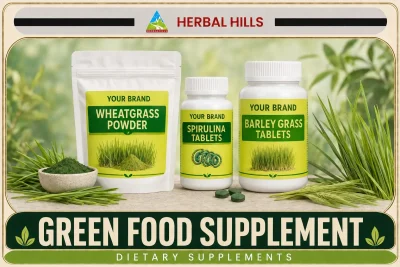
Green food supplements — built around ingredients like spirulina, wheatgrass, and moringa — cater to consumers looking for whole-food based daily nutrition. This is one of the fastest-growing categories in the wellness space, and Herbal Hills offers multiple formulation options within it.
Why Private Label Your Dietary Supplements with Herbal Hills
Building a dietary supplement brand across multiple categories typically means managing several vendors — one for protein, another for teas, another for tablets. Herbal Hills consolidates this under a single GMP-certified manufacturing partner, which simplifies quality control, reduces coordination overhead, and allows for consistent packaging and branding across your entire product line. The catalogue is manufactured at our GMP, ISO and USFDA-certified facility, supporting brands selling in both domestic and international markets.