

Blog
GMP vs ISO vs US FDA: Which Certifications Actually Matter for an Ayurvedic Brand?

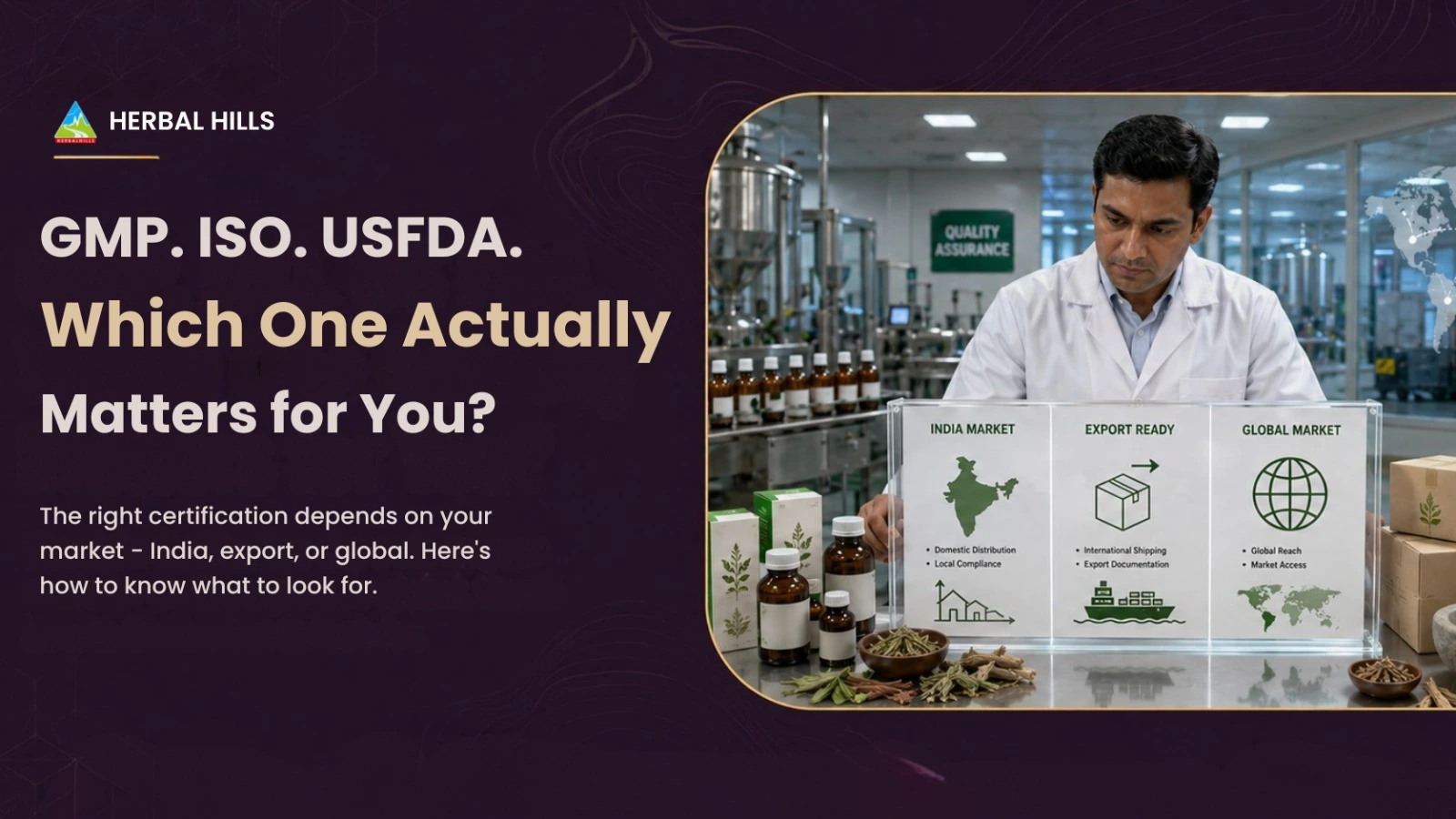
When comparing GMP vs ISO vs US FDA, one of the first questions entrepreneurs ask while selecting an Ayurvedic manufacturer is: “Does your factory have GMP?” The second question is usually: “Are you ISO certified?” And if they are planning to export to the United States: “Do you have US FDA registration?”
These are excellent questions. However, very few people actually understand what these certifications mean, what they certify, and what they do not certify.
Many people believe these certifications are simply certificates displayed on a wall. In reality, they reflect the manufacturing systems, quality processes, documentation standards and compliance practices followed inside a manufacturing facility.
GMP vs. ISO vs. US FDA — At a Glance
GMP
Good Manufacturing Practices — focuses on consistent, controlled manufacturing conditions.
- Raw material handling
- Manufacturing processes
- Cleaning & hygiene
- Equipment maintenance
- Quality control & storage
ISO
Internationally recognised management system standards — strengthens the overall organisation.
- Process management
- Documentation
- Quality management systems
- Customer satisfaction
- Continuous improvement
US FDA
Relevant for manufacturers supplying products to the United States market.
- Compliance with US regulatory requirements
- Smoother export process
- Greater confidence for international buyers
What Is a Manufacturing Certification?
A certification is not simply a document. It is an independent assessment carried out by an authorised organisation to evaluate whether a manufacturing facility follows specific quality standards and operating procedures. Before issuing a certification, inspectors generally review areas such as:
Why International Certifications Matter
Some manufacturers also obtain additional certifications and approvals from internationally recognised organisations. These often require further assessments of manufacturing systems and quality practices.
The more recognised quality certifications a manufacturer maintains, the greater the confidence many customers have in that manufacturer’s commitment to quality and compliance. While additional certifications may not always be mandatory, they often demonstrate a stronger quality culture.
Which Certification Is Important for Your Business?
The answer depends on your business goals.
Selling in India
Look for manufacturers with:
- GMP certification
- ISO certification
These provide a strong quality foundation for domestic manufacturing.
Exporting to the USA
In addition to GMP and ISO, working with a manufacturer that has:
- US FDA registration
can be a significant advantage.
Exporting Internationally
Additional internationally recognised certifications may:
- Strengthen buyer confidence
- Support market acceptance in certain regions
What These Certifications Do NOT Mean
This is equally important to understand.
Instead, certifications indicate that the manufacturing facility follows recognised quality systems and documented operating procedures. Product quality ultimately depends on several factors, including:
- Quality of raw materials
- Manufacturing processes
- Formulation
- Quality control
- Storage
- Consistency from batch to batch
Certifications support these systems — but they are one part of the overall quality picture.
Questions Every Customer Should Ask
When evaluating a manufacturer, don’t simply ask “Do you have GMP?” Instead, ask:
- Which certifications does your facility hold?
- Who issued these certifications?
- How often are inspections or audits conducted?
- Can I visit your manufacturing facility?
- What quality systems do you follow?
- How do you ensure batch-to-batch consistency?
- How do you manage hygiene and sanitation?
- What quality testing is performed before dispatch?
These questions provide a much better understanding of the manufacturer’s quality culture.
Why Certifications Matter in Ayurveda
Ayurveda is based on natural ingredients. Unlike many synthetic pharmaceutical ingredients, natural herbs can vary depending on:
This makes manufacturing discipline even more important. A well-managed manufacturing system helps ensure:
For this reason, certifications become an important indicator of the manufacturer’s commitment to quality.
Herbal Hills’ Commitment to Quality
At Herbal Hills, quality has always been our first priority. Our manufacturing facility operates with recognised quality systems to support both domestic and international business. Our quality approach includes:
For us, certifications are not simply documents displayed on the wall. They represent our commitment to maintaining consistent manufacturing standards every single day.
Final Thoughts
When selecting an Ayurvedic manufacturer, don’t choose based only on price. Choose based on quality systems, manufacturing discipline and long-term credibility.
A recognised certification is more than a logo on a brochure. It represents documented processes, inspections, quality standards and a commitment to manufacturing excellence.
Because in the health industry, certifications build confidence — but consistent quality builds lasting trust.
GMP vs ISO vs US FDA: Key Takeaway
GMP vs ISO vs US FDA is not a contest with one winner; each certification answers a different question about a manufacturer.
How does GMP vs ISO vs US FDA differ in purpose?
GMP vs ISO vs US FDA covers hygiene and process control, quality management systems and export-market compliance respectively.
Which matters most in GMP vs ISO vs US FDA for the Indian market?
For most Indian sales, GMP and ISO are the usual starting points in GMP vs ISO vs US FDA comparisons.
When does US FDA matter in GMP vs ISO vs US FDA?
It matters when you plan to export to the United States, which is where GMP vs ISO vs US FDA differences become practical.
How should you verify claims in GMP vs ISO vs US FDA?
Ask the manufacturer to explain which facility holds each certification, since GMP vs ISO vs US FDA claims should be verifiable.
Read more about international standards on the official ISO website.
Related Reading
Frequently Asked Questions
Which certification is most important for selling in India?
For most Ayurvedic businesses operating in India, GMP and ISO are among the most important quality certifications to look for in a manufacturing partner.
Do I need a manufacturer with US FDA registration?
If your long-term plan includes exporting products to the United States, working with a manufacturer that has US FDA registration can be a valuable advantage.
Does having more certifications mean better quality?
Additional recognised certifications often indicate stronger quality systems and greater commitment to compliance. However, certifications should be considered together with the manufacturer’s experience, reputation, quality philosophy and manufacturing practices.
Can I verify a manufacturer’s certifications?
Yes. A professional manufacturer should be transparent about the certifications held by its manufacturing facility and be willing to discuss its quality systems.
Should certifications influence my choice of manufacturer?
Absolutely. Certifications should be one of several important factors you evaluate, along with raw material sourcing, quality control, manufacturing experience, transparency and long-term reputation.