

Blog
Plant-Based Ayurvedic Protein Powders: A Fast-Growing Category on Online Marketplaces

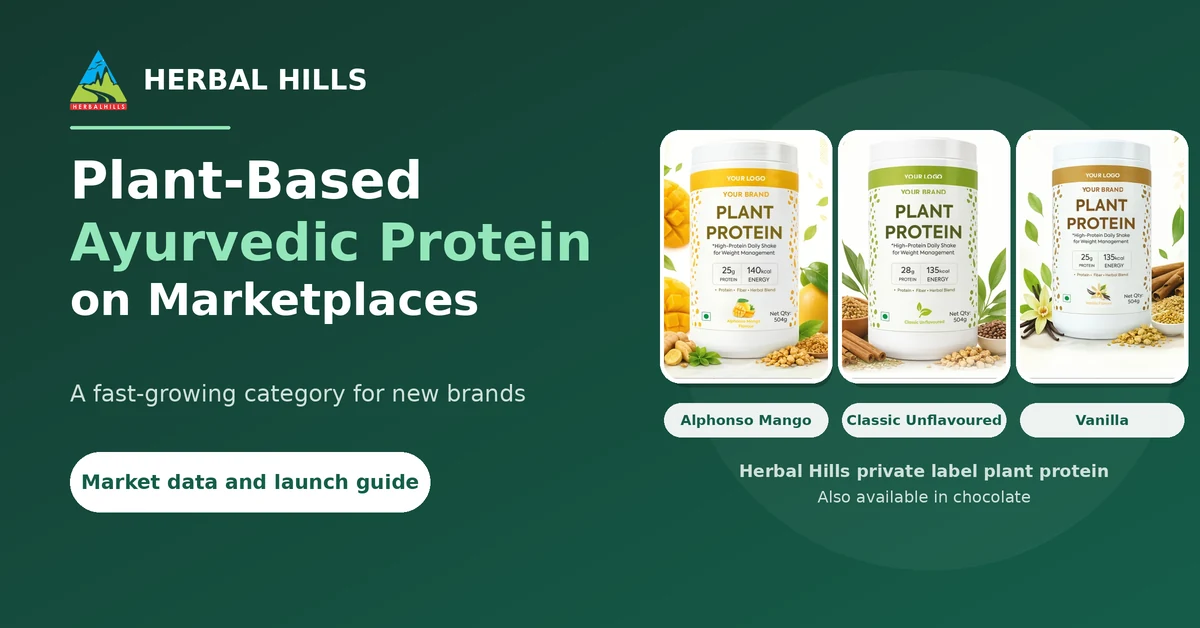
Protein used to be a gym product. Today it is an everyday nutrition product, bought on marketplaces, brand websites and quick-commerce apps, and increasingly by people who are vegetarian, lactose-sensitive or simply prefer plant-based food. For a new Ayurvedic brand, that shift is an opportunity: the category is growing quickly, but most of the shelf is still whey, so a thoughtful plant-based range can stand out.
This guide looks at what the latest industry data says about protein supplements and online sales in India, why plant-based and Ayurvedic positioning has room to grow, what marketplace shoppers and regulators expect, and how a brand can launch a plant protein powder with Herbal Hills without building its own factory. Figures are as reported by the sources named in each section, as of November 2026.
Why Is Protein Moving Online, and Why Is It Growing So Fast?
A report by Redseer Strategy Consultants, Health Supplements in India: From Medicine Cabinet to Daily Nutrition, estimates that India’s health supplements market was worth about $5.3 billion in FY26 and could reach $8.5–10 billion by FY31. Within that, protein and sports nutrition is expected to be the fastest-growing category, at about 19% a year, ahead of specialty bioactives (about 16%), Ayurvedic, botanical and traditional products (about 14%) and vitamins and minerals (about 11%).
The same report shows how quickly the buying channel is changing. Online supplement sales are projected to rise from about $1.3 billion in FY26 to $4.3–4.7 billion by FY31, taking online penetration from roughly 24% to 46–50% of the market. Quick commerce, which was about 17% of online supplement sales in FY26, could reach 37–47% of them by FY31.
Source: Redseer Strategy Consultants, as reported by Open Magazine, 19 November 2026. Bars are drawn to scale; the FY31 bar shows the upper end of the projected range.
What is selling on quick commerce today?
In April 2026, protein and sports nutrition made up 55% of supplement sales on quick-commerce platforms, according to the same report. Whey protein alone contributed 32% and creatine 8%. For brands, the important point is that the protein aisle online is still dominated by whey. Shoppers who are vegetarian, lactose-sensitive or looking for a gentler, plant-based option are an under-served group.
How Big Is the Plant-Based Protein Market in India?
There is no single agreed number, because research firms define the market differently. Some count protein ingredients sold to food companies, some count finished protein supplements, and some count only vegan protein powders. The table below shows the range, so you can see the direction rather than rely on one figure.
| What Is Measured | Figure | Source |
|---|---|---|
| Plant-protein ingredients market (India) | About ₹4,500 crore today, expected to double to ₹9,000 crore in five years | PBFIA, August 2026 |
| Plant-based protein market (India) | USD 634.3 million in 2025, projected USD 2,251.7 million by 2034 (about 14.4% a year) | IMARC Group |
| Vegan protein powders (India) | USD 174.2 million in 2025 | IMARC Group |
| Protein supplements, all sources (India) | USD 912.9 million in 2025, projected USD 1,578.1 million by 2034 (about 6.3% a year) | IMARC Group |
Two points stand out. First, plant-based protein is growing faster than protein supplements overall, which is consistent with plant-based being the fastest-growing segment. Second, nearly 90% of plant-protein ingredients in India are currently imported, according to PBFIA, which sees this as a major opportunity for domestic manufacturers. PBFIA also says India’s plant-based food sector is growing at around 18% a year, well above the 7–8% global rate.
Which plant protein sources lead?
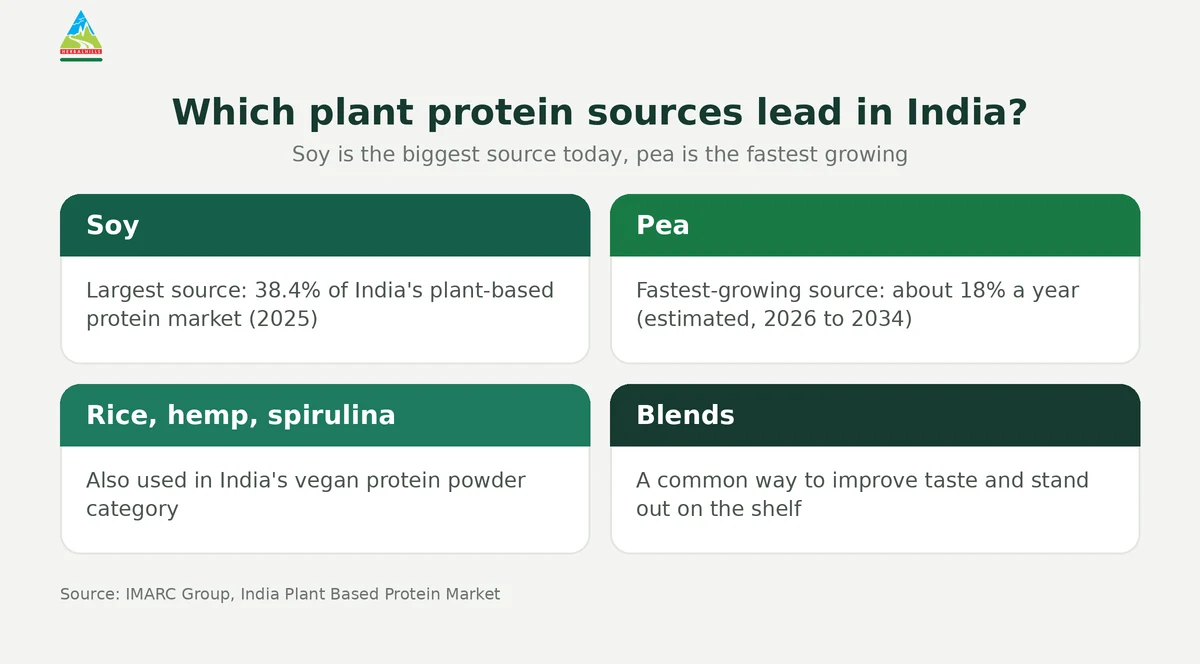
IMARC reports soy as the largest source segment of India’s plant-based protein market (38.4% in 2025) and pea protein as the fastest-growing, at an estimated 18% a year through 2034. Rice, hemp and spirulina-based powders and protein blends are also part of the vegan protein powder category. For a new brand, a pea and rice blend, or a blend with an Ayurvedic herb or green food, is a common way to differ from single-source soy products.
Why Do Plant-Based and Ayurvedic Positioning Have Room to Grow?
Several trends point the same way:
A Large Vegetarian Base
Analysts covering India’s sports nutrition e-commerce note that high rates of protein deficiency, combined with a large vegetarian and vegan population, make India stand out in Asia-Pacific.
Clean, Gut-Friendly Labels
Industry coverage in 2026 describes brands combining plant protein with ingredients traditionally linked to digestion, in response to demand for additive-free formulations.
Trust in Ayurveda
Ayurvedic, botanical and traditional products are projected to grow at about 14% a year, so an Ayurvedic story is a credible way to stand out in a crowded protein aisle.
Which Ayurvedic herbs can sit alongside plant protein?
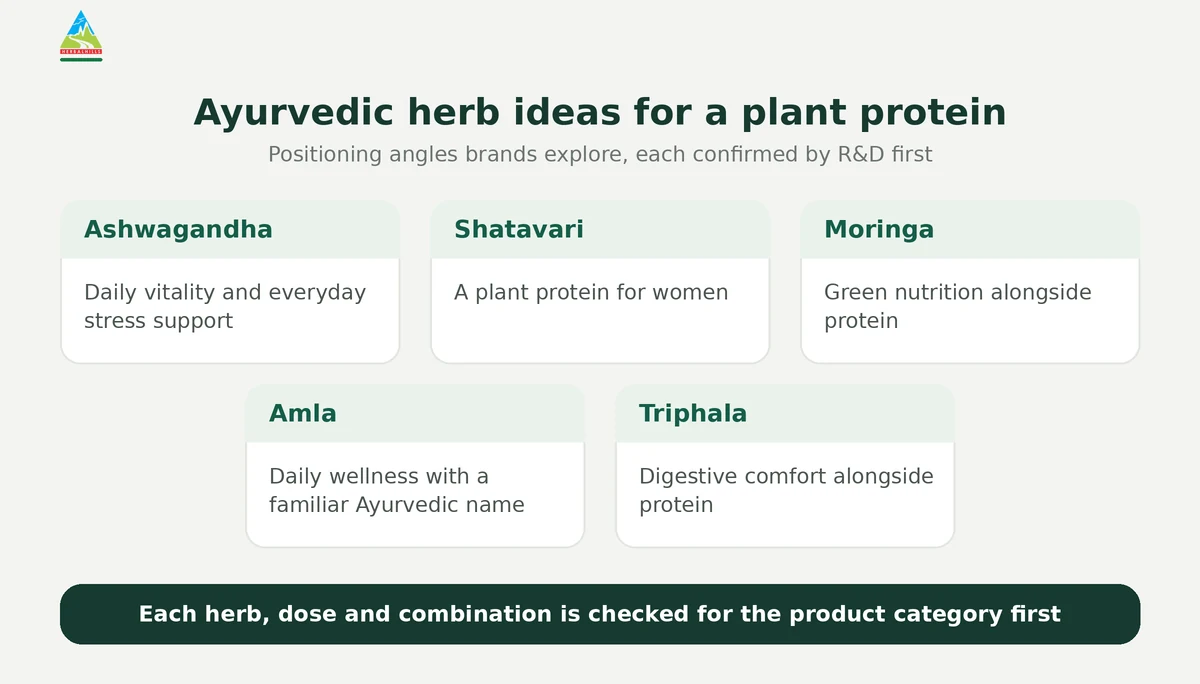
These are common ingredient ideas that brands explore when they want a plant protein with an Ayurvedic angle. Each herb, dose and combination must be checked for the regulatory category of the finished product, so the Herbal Hills R&D and regulatory team confirms what is possible for your formula before development begins. See how formula customization works for the full process.
| Ingredient Idea | Traditional Association | Positioning Angle |
|---|---|---|
| Ashwagandha | Rasayana herb for strength and calm | Daily vitality and everyday stress support |
| Shatavari | Women’s wellness herb | A plant protein for women |
| Moringa | Nutrient-rich leaf used in daily nutrition | Green nutrition alongside protein |
| Amla | Traditional Rasayana fruit | Daily wellness and a familiar Ayurvedic name |
| Triphala | Classical digestive formulation | Digestive comfort alongside protein |
What Do Marketplace Shoppers and Regulators Expect?
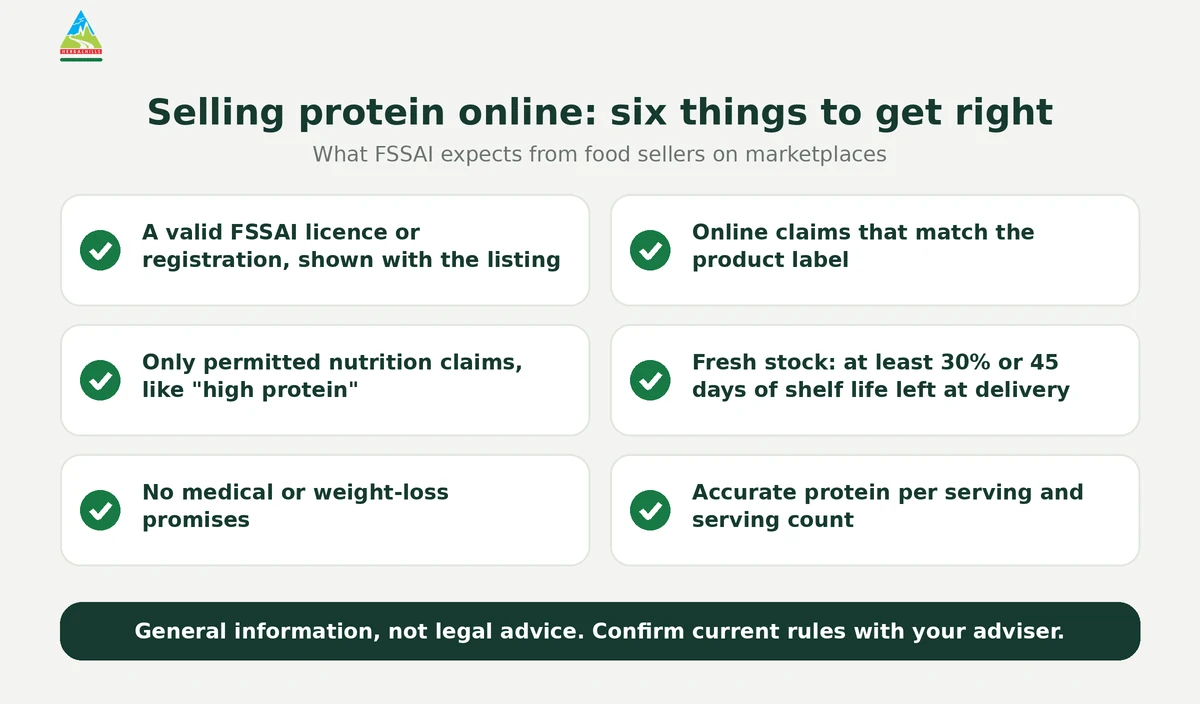
Selling protein online means your listing is read by two audiences: shoppers comparing options in seconds, and regulators who treat online sellers like any other food business. Keep the following in mind.
This section is general information based on FSSAI statements and press coverage, not legal advice. Confirm current rules with your regulatory adviser before listing.
What Makes a Plant Protein Powder Sell Online?
- Taste and mixability: plant proteins vary in taste and texture, so flavour development and trial samples matter more than for whey.
- A clear protein story: state the source (for example pea and rice), the protein per serving and how many servings are in the pack.
- A trial pack: a small pack or trial sachet lowers the risk of a first purchase for customers new to plant protein.
- Flavours people already know: chocolate, vanilla, strawberry and banana are among the flavours reported in India’s vegan protein powder market.
- Trust signals: batch testing, a certificate of analysis, a clean ingredient list and your FSSAI licence number on pack.
- A reason to reorder: a 30-day pack and a simple routine encourage monthly repeat purchases, which is where online brands build their value.
How Does Herbal Hills Help You Launch a Plant-Based Protein Powder?
Herbal Hills is a GMP and ISO-certified manufacturer in Lonavala, Maharashtra, with more than 25 years of Ayurvedic and nutraceutical manufacturing. Its plant protein manufacturing range is built for private label, and for plant protein powders it can support your brand with:
How Do You Launch Your Plant Protein Powder? Six Steps
🎯Define Your Customer
Choose who the product is for: vegetarian gym-goers, women, busy professionals or families, and decide the channels you will sell on.
🌱Pick the Base and the Story
Choose a ready plant protein, or brief R&D on an Ayurvedic or green-food variant.
🥄Test Samples
Request free trial samples and test taste, mixability and presentation with real customers.
🏷️Design a Compliant Label
Finalise the label and marketplace listing wording with claims review, matching what is on the pack.
📦Place a Starter Order
Order small quantities first, with documentation ready for your marketplace seller account.
📈Launch, Learn and Reorder
Track reviews and reorders, then add flavours, pack sizes and herb variants based on what sells.
Who Should Launch a Plant-Based Ayurvedic Protein Powder?
| Brand Type | Why It Fits |
|---|---|
| Marketplace sellers | A private label range sold on the platforms you already know, as described in our guide for Amazon and Flipkart sellers |
| Gyms and fitness brands | A plant-based option for vegetarian members and a clear point of difference, as covered in our fitness and sports nutrition guide |
| D2C wellness brands | A daily-use product that supports monthly reorders and subscriptions |
| Ayurvedic doctors and clinics | A clinic-branded plant protein that fits a daily nutrition plan |
| Direct selling companies | A daily product with a monthly refill cycle, as discussed in our guide for MLM and direct selling companies |
| Export brands | Plant-based demand abroad, with documentation and rules confirmed for each destination market |
Frequently Asked Questions
Is the plant-based protein market really growing in India?
Yes. Industry bodies and research firms all report growth, although their figures differ because they define the market differently. PBFIA says India’s plant-protein ingredient market is about ₹4,500 crore and could double in five years, and Redseer expects protein and sports nutrition to be the fastest-growing supplement category through FY31.
Why sell plant protein online instead of only offline?
Online is becoming the main growth channel for supplements. Redseer projects that online penetration could rise from about 24% to 46–50% of the market by FY31, and quick commerce is gaining share for products that people replenish often, such as protein powders.
What makes a plant protein powder “Ayurvedic”?
It is positioned around Ayurvedic ingredients and a traditional approach to daily nutrition, for example by adding herbs such as Ashwagandha or Moringa to a plant protein base. Which herbs and doses are possible depends on the product category and rules, so Herbal Hills confirms the options for your formula before development.
Which plant protein sources are most common?
Soy is the largest source in India’s plant-based protein market, and pea protein is the fastest-growing. Rice, hemp and spirulina-based powders and protein blends are also used. Many brands use a blend to improve taste and make the product stand out.
What does FSSAI require for protein powders sold online?
Sellers need a valid FSSAI licence or registration, online claims must match the label, and nutrition claims such as “high protein” or “plant-based” must meet FSSAI’s criteria. FSSAI has also asked e-commerce food businesses to deliver products with a minimum remaining shelf life of 30% or 45 days. Confirm current rules with your regulatory adviser.
Can I launch with a small quantity?
Selected QuickLabel™ formulations start from about 50 pieces, and the Herbal Hills team confirms the exact minimum for each product before you order. Free trial samples are available so you can test the product first.
How long does it take to get my own plant protein powder?
Ready QuickLabel™ products are prepared in about seven working days after payment, label approvals and order confirmation. Herb-enriched or customized variants take longer because they need development, testing and, where needed, licensing. The team gives a timeline after your brief.
Can Herbal Hills make a flavour or herb blend only for my brand?
Yes, within regulatory limits. The R&D team can adapt flavours or develop herb-enriched variants, and ownership and exclusivity are agreed in writing before development starts.
Build a Plant Protein Range Online Shoppers Can Trust
Protein is moving from the gym bag to the daily routine, and the shelf is still crowded with whey. A well-made plant-based protein powder with an honest label, a clear Ayurvedic story and a reason to reorder gives a new brand a real place to stand. According to Herbal Hills, brands that start with a focused plant protein range, test it with trial samples and grow on real reorder data build the most dependable online businesses. Request the Herbal Hills supplements catalogue and free trial samples to start planning your range.
Request the Supplements Catalogue & Free Samples →
Sources
Redseer Strategy Consultants, Health Supplements in India: From Medicine Cabinet to Daily Nutrition, as reported by Open Magazine, 19 November 2026. PBFIA statement reported by PTI in Business Standard, 27 August 2026. IMARC Group, India Plant Based Protein, Vegan Protein Powders and Protein Supplements market reports. FoodNavigator, 20 July 2026, on sports nutrition e-commerce in Asia-Pacific. FSSAI statements on e-commerce compliance (November and December 2024) and Business Standard coverage of FSSAI labelling rules, June 2026.